You have chosen Miami, and you already know the kind of day you want there: a boat behind the house, a quiet street under old trees, or the bay seen from a tower a few blocks from the office. Any of the best neighborhoods in Miami can promise a version of that.
The harder question is what the address asks in return. Who can reach your street, how high the lot sits above the water, and what a neighbor may build next door are decided by the place, and the listing rarely says. Miami-Dade County has 34 municipalities, so the next street over can answer to another government, with another tax rate and other building rules.
Choose the way of life first, then read the rules that protect it. For each of the twelve neighborhoods below, that means what it gives a buyer, what it asks back and what to check at the address before an offer.
If you are weighing two or three of these neighborhoods, email me, message me on WhatsApp or call +1 305-874-9500, and we can go through what matters to you and which one fits, with an answer the same day.
The best places to live in Miami split first by how you want to live, and each way brings its own daily rule.
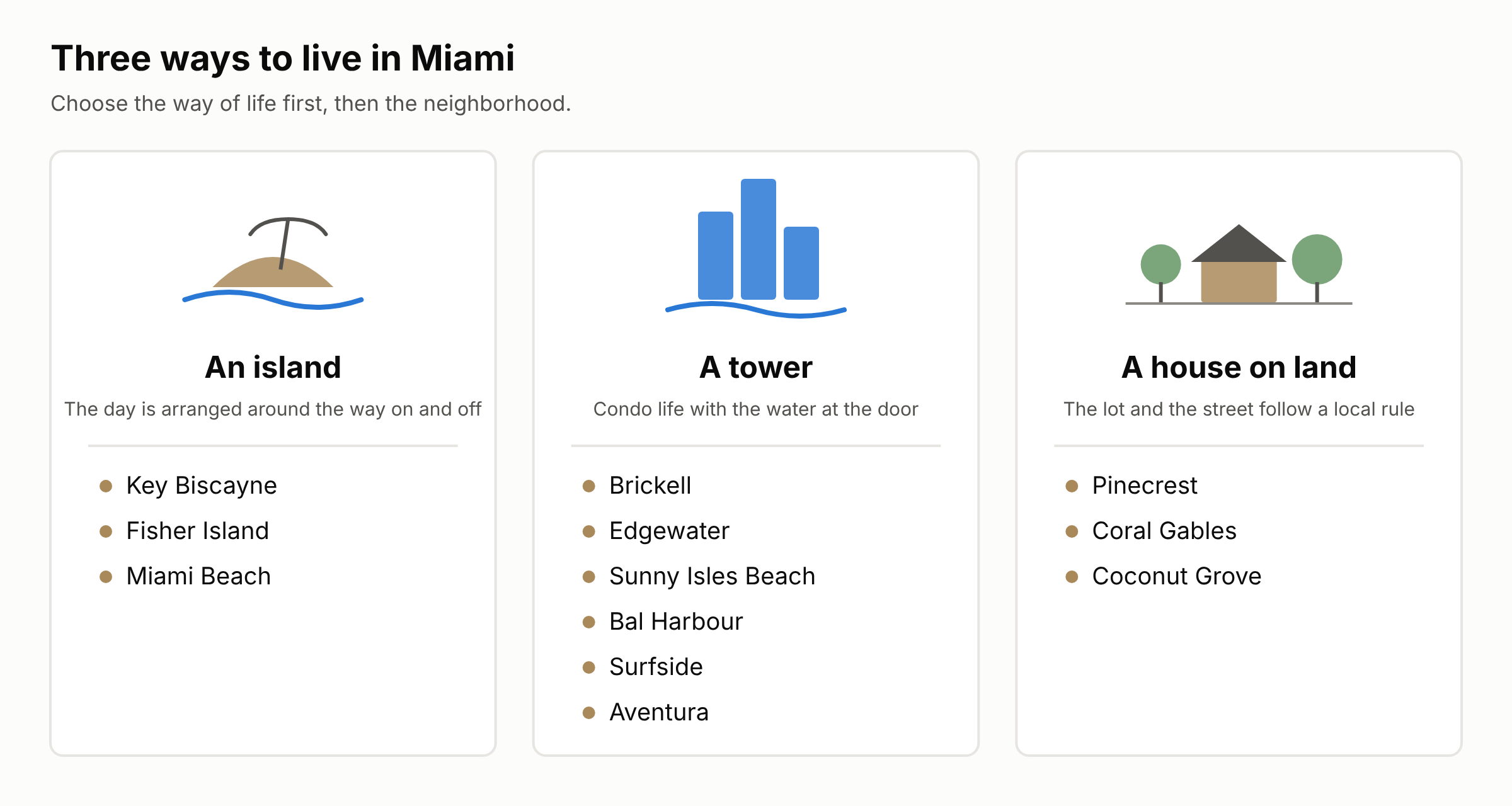
Three of the best neighborhoods in Miami are islands, and they differ in what the way in gives: Key Biscayne a slow town with one road, Fisher Island a ferry and a guest list, Miami Beach a choice between gated bay islands and the open ocean side.
Key Biscayne lives at the pace of a small island town: one causeway in, slow streets inside, and an ocean beach kept for residents. The Rickenbacker Causeway is the only way on and off the island, so no traffic crosses the island on its way somewhere else.
The slow pace is written into the street signs. Every street but two is posted at 20 mph; only Crandon Boulevard and Harbor Drive carry 30. At the end of those slow streets, Beach Park on East Enid Drive opens to residents with a key fob from the Community Center.
Beyond the residents’ beach, the island is flanked by two large parks, Crandon and Bill Baggs, with a flat, paved bike path under trees, so the ocean, the trail and the lighthouse are part of an ordinary morning.
The same parks hold the island’s boat life. No Name Harbor, inside Bill Baggs Cape Florida State Park, takes boats at anchor overnight, and the Key Biscayne Yacht Club sits on Harbor Drive.
Ashore, the island splits by type of home. West of Crandon Boulevard the island is houses; east of it, mid-rise and high-rise condos. The condo side sells more often and gives the wider pick of Key Biscayne condos, while Key Biscayne homes sell more slowly, which leaves a house buyer more time to compare.
Both sides share one school: Key Biscayne K-8 Center is the home school for island residents, so the school day does not need the causeway. The Florida Department of Education (FLDOE) graded it A in 2023-24 and in 2024-25.
Holding a home on the island costs less in tax: the rate is the lowest of the twelve, about $4,490 a year below the City of Miami’s on $1 million of taxable value.
Insurance depends on the address: the flood zone and the elevation set the quote, and the island’s place in FEMA’s Community Rating System (CRS), Class 8, takes 10% off eligible flood policies. Elevation matters near the shore, where king tides closed the lighthouse grounds in October 2026, so for a shore house, ask the seller for the elevation certificate.
At the top of the market, a house on Harbor Drive sold for $17.5 million, reported in July 2026. Key Biscayne waterfront homes cover the shore houses.
Miami Beach is also an island city on the ocean, but a big one: it swaps the single quiet road for a wider choice of homes and a Beachwalk that runs nine miles. For a buyer who wants that range, it is the next island to look at.
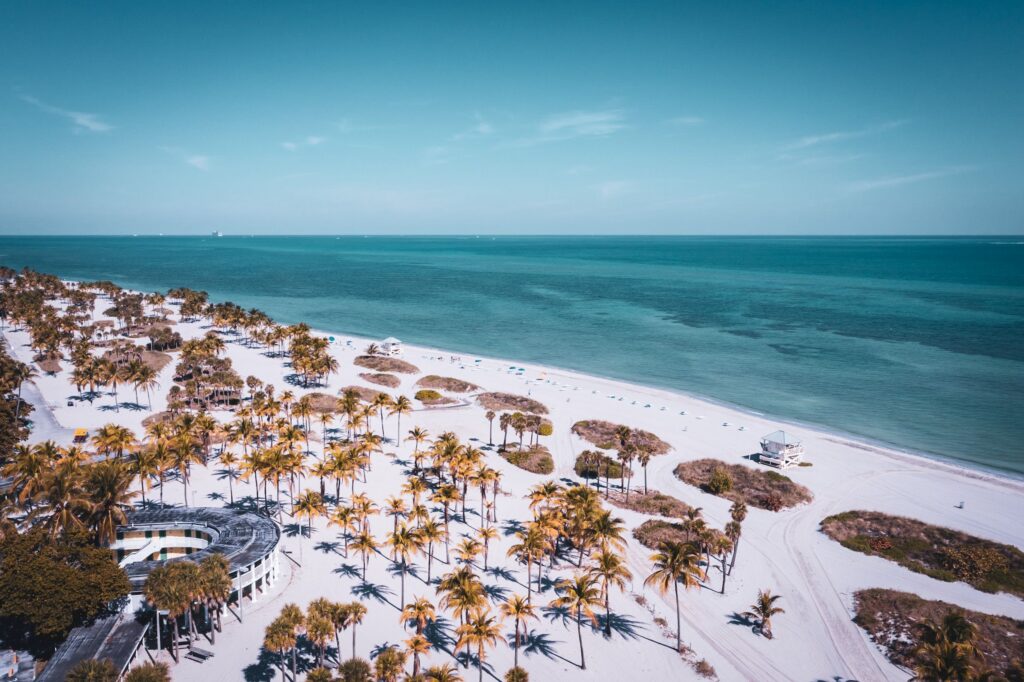
On Fisher Island, the way in is the whole point: every arrival comes by the island’s own 24-hour passenger ferry or by yacht, and a guest needs security clearance arranged in advance. No one reaches the front door by chance.
The ferry runs around the clock, every 10 to 15 minutes, and the crossing takes seven minutes: the island lies less than two miles from South Beach and downtown Miami. The price of that control is a short wait at the dock.
School is the part of the day that changes with age. Fisher Island Day School takes children from age two through eighth grade; the high school years are off the island, so the assigned school for the address is worth checking.
A large boat stays on the island as well. Two marinas hold more than 100 slips, and the Vanderbilt Marina takes yachts over 250 feet.
Ashore, any exterior change goes through the architectural control committee, so the view from a terrace stays as approved.
The island is condos and townhouses; the Links Estates plat holds only 12 house lots, so a house is bought when one appears, whatever the buyer’s timing. Fisher Island condos carry the choice, while Fisher Island homes come up seldom.
A condo sold for $35 million in December 2025, the island’s record.
Key Biscayne is the other island in this group, at the opposite end of the same idea: island life behind a public causeway, open at any hour, with no clearance at the gate. A buyer who wants the island without the guest list starts there.
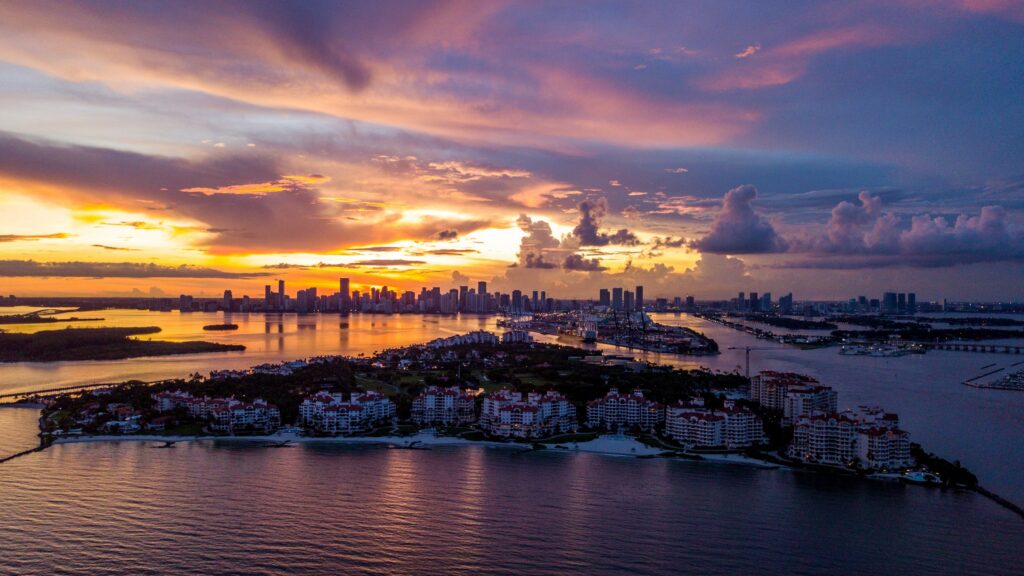
Miami Beach holds two ways of living inside one city line: a house on a residential island in the bay, or a home on the ocean side, where the beach is the daily path.
On the bay, each island keeps its own entrance. Star Island has a guardhouse at its gate, and the Sunset Islands have restored their historic one. On La Gorce Island, association membership is open only to owners. A guardhouse does not close the road itself: Star Island Drive is a public road. Gated Miami Beach homes sit behind the islands’ own entrances.
Behind those gates, the bay is the boat side. An island house often has the water on its own lot (Miami Beach waterfront homes), and for a boat kept off the lot the city has a ramp at Maurice Gibb Park. On the Venetian Islands, the causeway’s east span opens only on the hour and half hour, from 7 a.m. to 7 p.m., so a trip by car or by boat is planned to the half hour.
The water on the lot comes with a seawall, and the owner keeps it. About 91% of Miami Beach seawalls sit on the owners’ land, and a new wall must reach 5.7 feet NAVD, the national elevation datum surveyors measure from. The current wall’s height shows whether raising it belongs in the budget.
The house behind the wall is often older than flood codes: 3,894 of the city’s 4,833 single-family homes went up before the mid-1960s, the islands’ historic houses among them. A large renovation there falls under FEMA’s 50% rule, so the permit history of the address shows where a plan starts.
Not every island in the bay is Miami Beach, though: Biscayne Island and San Marco on the Venetian Causeway belong to the City of Miami, with a different rate and different rules. The parcel’s record names the city, so read it before comparing tax bills.
Across the city, on the ocean side, the Beachwalk, a paved path open 24 hours a day, runs along the sand. South of Fifth fills the southern tip, from Fifth Street to Government Cut, so the ocean and the bay are both a few blocks away, with South Pointe Park and its beach access on the water.
The tip of the city also brings traffic and noise; the side of the building decides how much reaches the unit, so choose the side of a South of Fifth condo first.
The two lives also make two markets. Miami Beach condos sell in greater numbers and stay on the market longer, which gives a buyer time to compare. The top of the market is Miami Beach homes: at $10 million and up, house sales outnumber condo sales in the sales table below. A waterfront property on North Bay Road sold for $72 million, reported in August 2026.
A few miles north on the same ocean strip, Bal Harbour keeps the gated houses on the bay but drops the big city around them: a small town with a beach entrance kept for residents. Between the two, the choice is range against seclusion.
On the islands and the bay, the search starts with what the home should give you. Describe it by email, on WhatsApp or at +1 305-874-9500, and the selection will include the homes that fit, some of them not listed publicly.
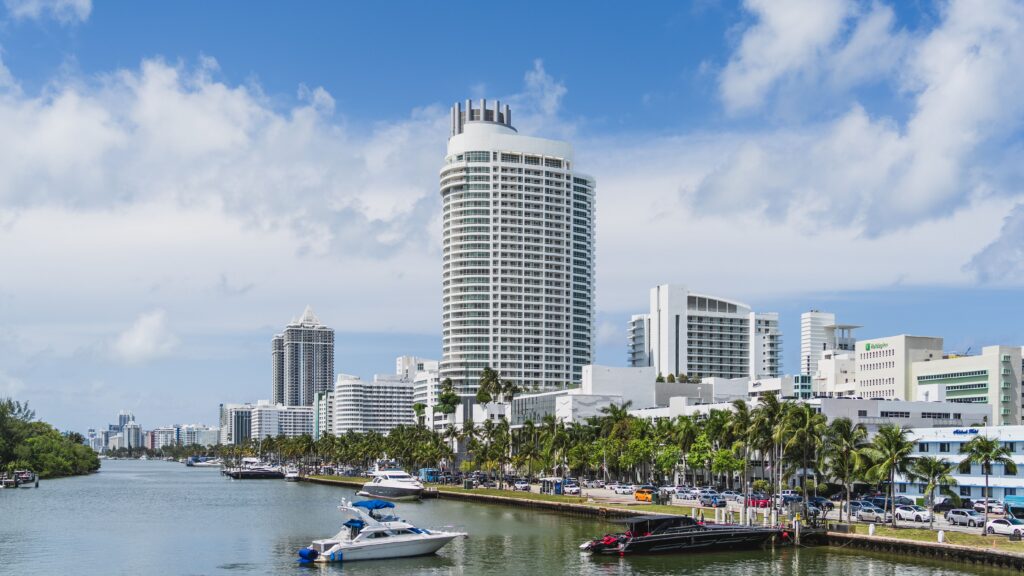
Among the best neighborhoods in Miami for condo life, the six tower areas differ in what surrounds the building. Brickell gives the office district at the door, Edgewater a calmer street on the same bay. Sunny Isles Beach gives the ocean at a gentler entry, Bal Harbour a gate and a residents’ beach, Surfside a town on foot. Aventura gives houses in the same city as the towers.
In Brickell, the walk from home to the office can be a few blocks, because the towers stand inside Miami’s financial district. The area around Mary Brickell Park is officially Downtown’s Financial District, and the housing market here is condos.
For a buyer who travels, Miami International is 22 minutes from Brickell City Centre.
The bay’s edge is public by law. Since 1979, new buildings on the bay must stand 50 feet back from the water, and each must build a public promenade 25 feet wide, so the waterfront walk grows with every new tower.
Those towers also make a deep condo market. Brickell’s ZIP, counted with Downtown, sold more condos than Edgewater’s and held a long supply (see the sales table). For a buyer, that depth means time to compare Brickell condos and room to negotiate.
The same depth shapes a later sale. With a wide choice on the market, the line and the view of the unit are what set it apart at resale, so they are worth choosing now with that day in mind. Units facing the bay are listed as Brickell waterfront condos. The range reaches high: a Brickell penthouse sold for $17.9 million, reported in August 2026.
Two yearly bills depend on the address. On flood insurance, CRS Class 6 is worth a 20% discount on eligible policies, and the flood zone of the building still goes into the quote. The tax bill runs the other way: the City of Miami rate, shared with Edgewater and Coconut Grove, is the highest of the twelve.
A short walk north on the same bay, Edgewater gives up the office at the door for a calmer street.
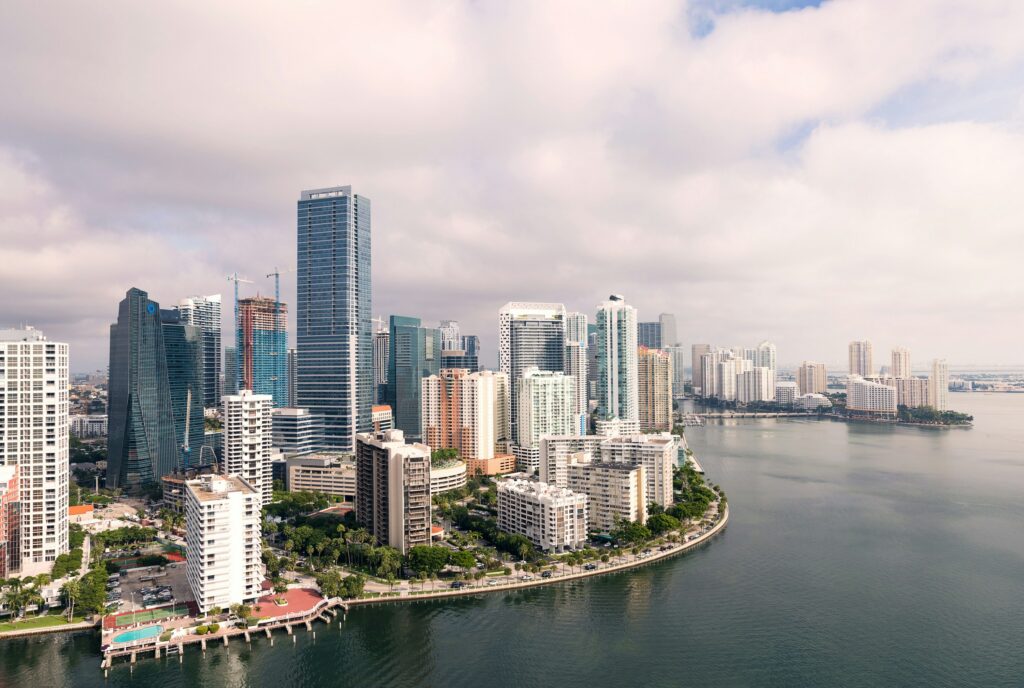
Edgewater, the residential side of Greater Downtown known for its bay views, gives bayfront condo life a calmer beat than Brickell’s, with a park on the water at its center and the financial district a short walk south.
Margaret Pace Park, on North Bayshore Drive, sits on the water among the condos and works as the neighborhood’s shared yard: a morning on the bay starts at the building door, without a club membership. From the park, stretches of the Baywalk lead past the FEC Slip, where some of the world’s largest yachts tie up. The walk runs in pieces, so the block decides how much of it starts at the door.
The calmer streets come with a smaller market. Edgewater’s ZIP sold fewer condos than Brickell’s, at a median slightly higher, so a quieter block does not come cheaper. Supply still ran long, as in Brickell. Edgewater waterfront condos sit on the shore, and wider Edgewater condo listings cover the streets behind it.
The block also decides the sound. Near the I-395 bridge at the south edge, work starts before 7 a.m. and is scheduled through 2029, so for a building there a visit at that hour shows how much of it reaches the unit.
On the bay, the flood zone of the building goes into the insurance quote: 370 addresses here sit in zones AE and VE, FEMA’s high-risk zones, where VE adds wave action. As part of the City of Miami, Edgewater shares its CRS Class 6 discount on eligible flood policies.
A short walk south, Brickell has the deeper condo market of the two and the office at the door.
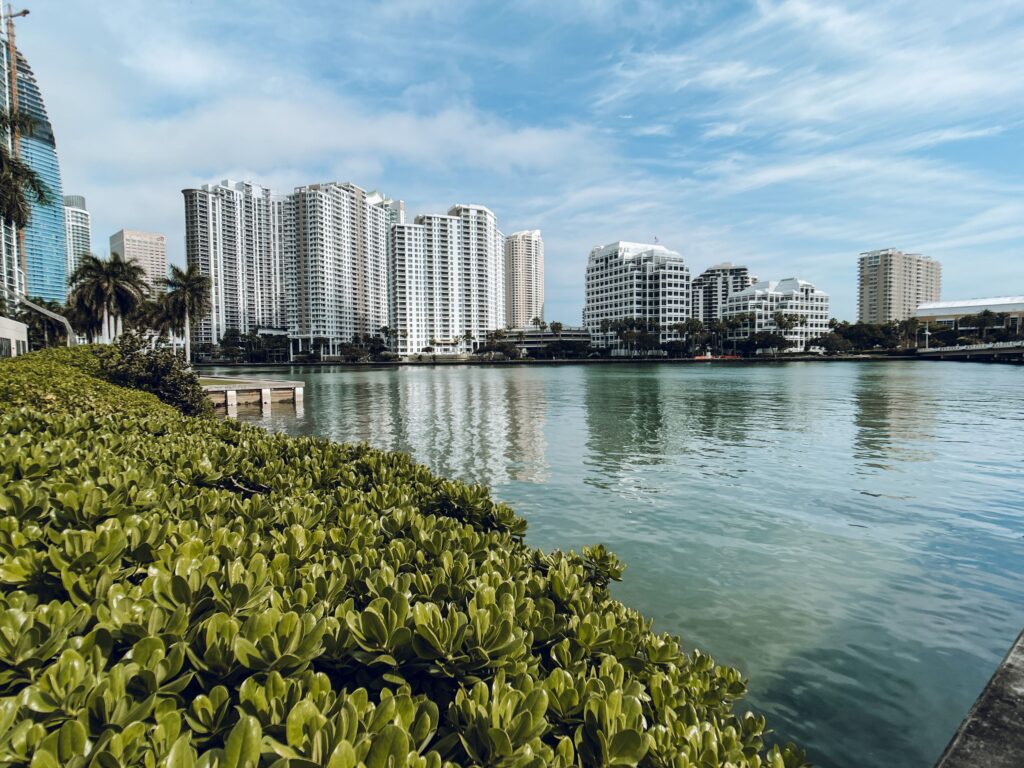
Sunny Isles Beach puts the Atlantic at the door of its towers at a gentler entry than its southern neighbors: its condo median runs well below Bal Harbour’s and Surfside’s. Behind the towers, on the Intracoastal, are streets of Sunny Isles Beach homes where some lots end at a dock.
The towers line the beach on Collins Avenue and hold nearly all of the sales. With a long supply, a buyer has room to negotiate; Sunny Isles Beach waterfront condos show the oceanfront choice.
Between the towers and the houses, the city’s 11 parks are kept for walking: an ordinance bans bicycles, skates, skateboards and scooters in all of them, so a path stays quiet.
The other side of the city is for boats. Sunny Isles Beach has 367 single-family homes, set back from the oceanfront. At least 53 of them list a dock in the county’s 2026 roll. On Atlantic Island, 31 of 49 houses do, and Sunny Isles Beach waterfront homes show the ones on the market. On the way out, the NE 163rd Street bridge opens on signal during the day, so a tall boat passes on an opening, with no fixed height limit.
With most sales on the tower side, a buyer waits for a house to come up here, and for a large yard the list is shorter still: only six lots in the city reach 20,000 square feet.
The street around the house is changing in one direction. In Golden Shores, 141 of 164 houses stand on lots of the same size, 7,500 square feet, and 121 of 130 houses built before 1970 have one story, while all 15 built from 2020 to 2025 have two or more, so a one-story neighbor can become a taller house; the permits filed next door show what is planned.
All 367 houses sit in flood zone AE, so request a quote for the exact house and its elevation certificate early.
On the ocean side, a Sunny Isles Beach penthouse sold for $33 million in September 2026: the gentler entry is the median, not the ceiling.
For a buyer drawn here by the houses, Pinecrest is a neighborhood built around the house on its own land. If a large lot matters more than a dock and the ocean nearby, it gives one by code, with a one-acre minimum in its estate district.
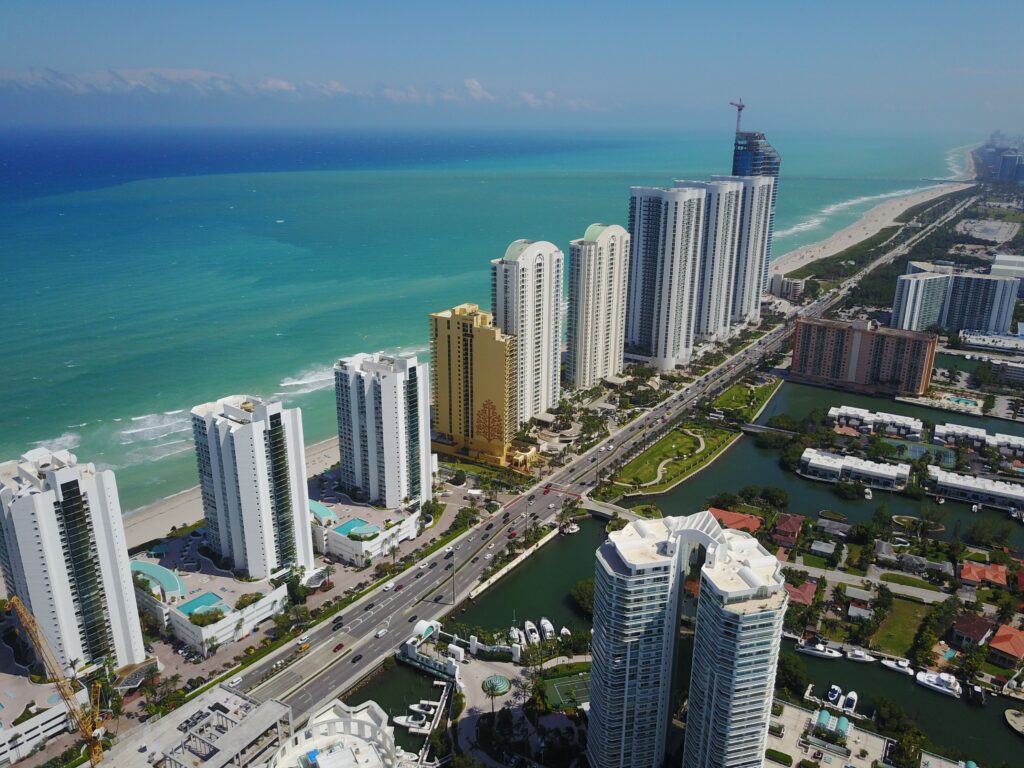
Bal Harbour has long been a fashion address, with high-end shops and five-star hotels on Collins Avenue. Behind it sit two quieter things the shops do not show: a gated enclave of houses on the bay and a beach access kept for residents.
The houses sit behind a gate. Park Drive is closed to through traffic from Collins Avenue to the gate: privacy here starts before the guardhouse. Houses there seldom come up for sale.
On the ocean side, the 102 Street Beach Access is reserved for Bal Harbour residents.
Between the beach and the bay, the plan of the town sets three bands: towers up to 275 feet on the ocean, buildings of 30 to 45 feet west of Collins, and houses toward the bay. The band of the address sets the view and the noise level. Bal Harbour condos span the bands, and units facing the water have their own page of Bal Harbour waterfront condos.
The town’s setting shows in the price. Bal Harbour’s condo median is the highest in the sales table below, while Sunny Isles Beach, across Haulover Inlet, sits at about a third of it, on the same ocean.
On flood insurance, Bal Harbour holds CRS Class 8, worth 10% off federally backed policies in AE zones.
At the top of the town’s market, a Bal Harbour penthouse sold for $20.9 million, reported in July 2026.
Next door to the south, Surfside answers with the opposite habit: a public mile of beach and Harding Avenue, a main street of small shops.
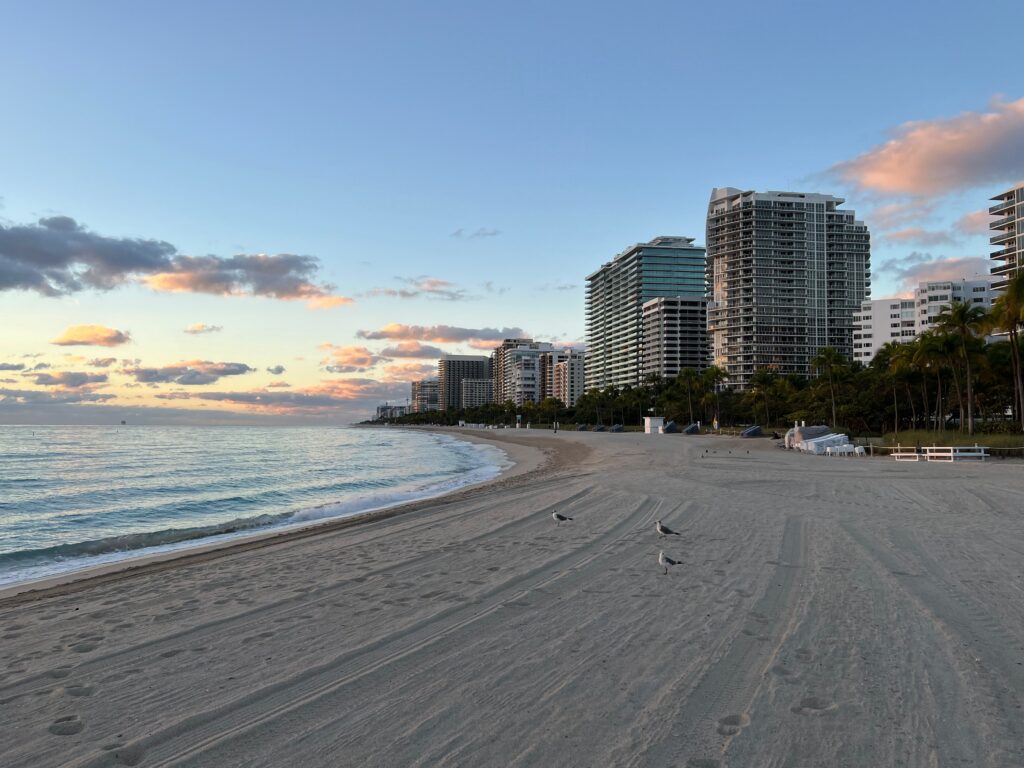
Surfside is a small beach town in the plain sense: from its house streets, a mile of public beach and Harding Avenue, the two-block main street of small shops and restaurants, are both reached on foot. It has kept a small-town feel between the bustle of Miami Beach and the calm of Bal Harbour.
West of the beach, the houses stand apart from the hotels. The residential base lies south of 95th Street and west of Harding Avenue, down to 87th Street, while hotel and condo brands sit on Collins Avenue, a few blocks away. Surfside homes cover those streets.
From those streets, the beach doubles as the gym. A trail with eight workout stations runs along the beach path from 89th Street north, and the Beachwalk continues to Bal Harbour and Miami Beach, so a morning walk can reach a second town.
Living this close to the ocean means planning for the water. The town holds CRS Class 6, which takes 20% off eligible flood policies. On Abbott Avenue it is adding two new pump stations under a state Resilient Florida grant; for a house near Abbott, the town can say whether that work is finished.
On the ocean side, the small town holds two condo markets: its sales split between ordinary prices and $10 million and up, so one Surfside condo cannot be priced by the town’s median. A penthouse in Surfside sold for $86 million in November 2025; as of April 2026, no condo in Miami-Dade had recorded a higher price.
For a buyer who would trade the public mile for sand shared only with neighbors, Bal Harbour’s 102 Street entrance is next door.
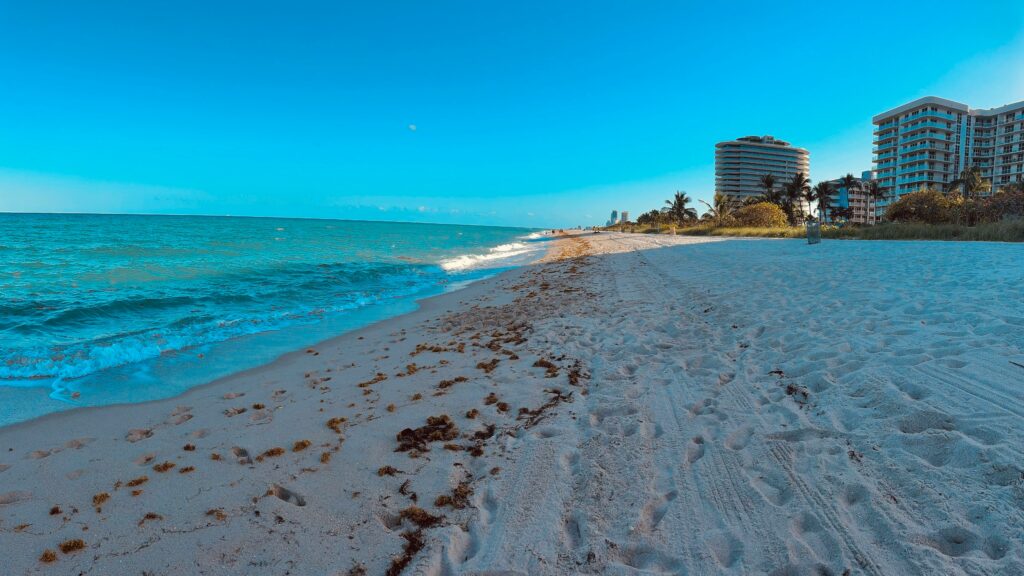
Aventura was built as an upscale condo city on the water, with the Intracoastal Waterway as its eastern boundary. Inside the same city, with the same tax rate, are streets of single-family houses.
The water here is the calmer Intracoastal. In the bayside part of Founders Park, walkways lead to a bay walk over the waterway, so the Intracoastal is part of the day as well as the balcony view. Inland, around the Turnberry golf course, a 3.1-mile public exercise path circles the fairways, open to anyone. On the water, Aventura waterfront condos hold the widest part of the choice.
On flood insurance, CRS Class 7 takes 15% off policies inside the flood zone and 5% outside it.
The towers make a large market of Aventura condos, with the lowest condo median in the sales table. Supply ran long here too, so a buyer is rarely rushed. None of its sales of $1 million or more reached $10 million (see the sales table); the choice is wide in the middle of the market.
Away from the towers, Aventura Estates and Country Club Estates, and the cluster homes of Aventura Lakes, are single-family subdivisions inside the city. A move from a condo to a yard keeps the city, and Aventura homes cover that side of the market. Few houses sell in a quarter.
A house in the city also comes with a school by address: Aventura Waterways K-8 earned an A from FLDOE in each of the last two school years graded.
A short drive east, Sunny Isles Beach sits on the same Intracoastal with the Atlantic in front as well: the next step when the open ocean matters more than calmer water.
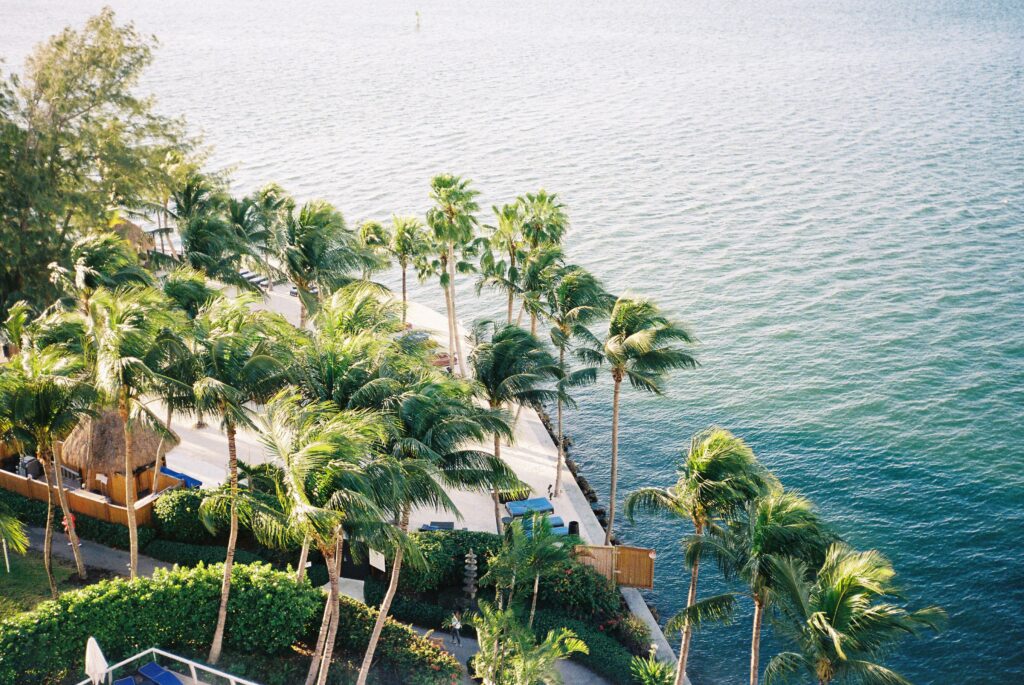
In a condo tower, the building’s own papers matter as much as the address. With every client, I look at the building before the unit.
Florida requires a milestone inspection for condo buildings of three stories or more, due by December 31 of the year the building turns 30 and every decade after. The law also requires a structural integrity reserve study, a plan for funding major repairs, at least every 10 years. For a building near 30, both reports belong in hand before an offer.
Towers still under construction have their own Miami pre-construction listings.
Each of the three house neighborhoods guards something, and each guard has a price: Pinecrest’s lot coverage limits how much house fits on the acre, Coral Gables’ review slows a rebuild, and Coconut Grove’s height cap keeps houses under the trees.
In Pinecrest, the room around the house is set by code: in the EU-1 estate district, the minimum lot is one acre. A house covers a fifth to a quarter of the lot, and at least 55% stays green, so a pool, a garden and a yard all fit. The same limit applies to your own plans: a large new house is measured against lot coverage first.
That distance is also privacy. With one house to an acre, the next roof sits across a lawn.
The acre applies in EU-1, and other districts here set smaller lots. Pinecrest homes span both, so the zoning district of the address decides how much room the house really has.
The trees between the houses are a local project too. Pinecrest is a Tree City USA and has planted over 10,000 street trees since 1997. Removing a tree on your own lot needs a permit, which protects your shade as much as your neighbor’s.
School can stay in town the whole way: in FLDOE’s 2025-26 grades, Pinecrest Elementary and Palmetto Elementary earned an A. Palmetto Middle and Miami Palmetto Senior High did too, so by address the A grades run from elementary school to graduation.
Property tax costs less than in the City of Miami: about $2,460 a year less on $1 million of taxable value. Inland, Pinecrest holds CRS Class 7, which takes 15% off eligible flood policies, and the flood zone of the address still goes into the quote.
Even without a shore, Pinecrest records house sales of $10 million and up (see the sales table). A Pinecrest mansion sold for $13.5 million in September 2026.
Coconut Grove, also a neighborhood of houses, has what Pinecrest lacks: the bay. It offers no acre, but a shore the city keeps nearly all public, with a city marina in the neighborhood.
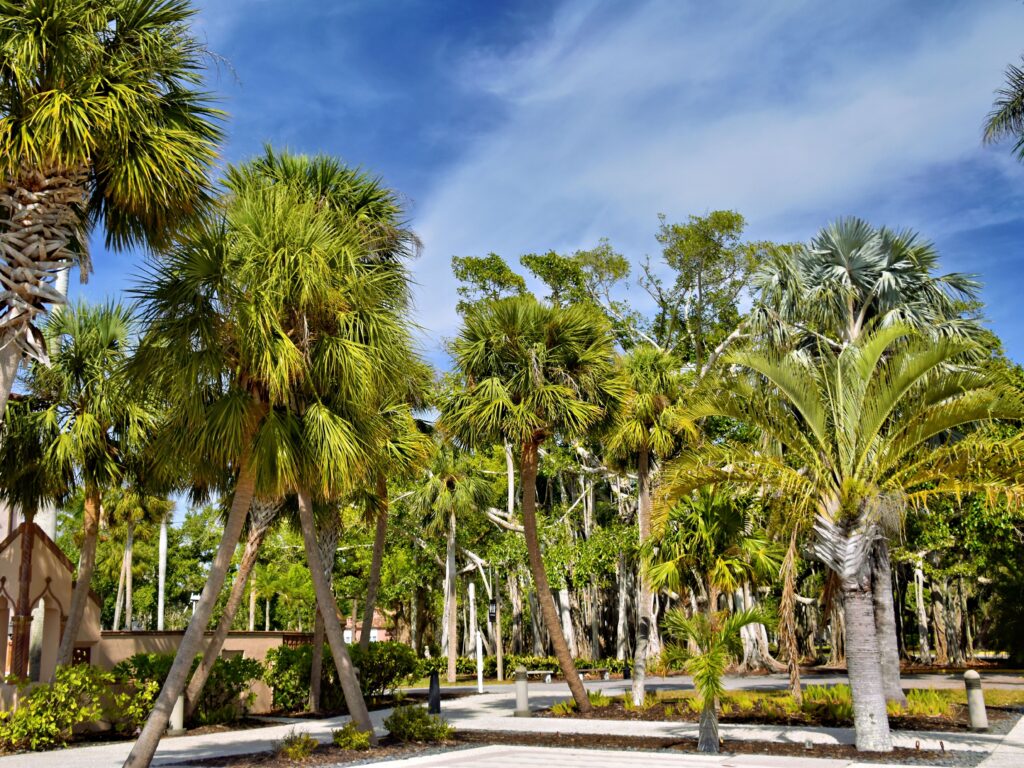
Coral Gables has been the City Beautiful since it was planned, and it still holds every new exterior to that standard: each one goes through the Board of Architects before it is built. A new house next door has to pass the same review as yours.
The city was planned with a predominantly Mediterranean architectural character, and the review keeps it. Even the demolition of a building that is not designated needs the Historic Preservation Officer’s signature.
Coral Gables fits a buyer who values the street’s look over a fast rebuild: a rebuild passes two reviews, so the historic status of the address shapes the plan.
The same care reaches the shade over the street. The city counts nearly 39,000 street trees, with canopy over 58% of its area. Miracle Mile, four blocks of Coral Way, is the city’s main street, with wide sidewalks under oaks, so the shops sit in the same planned setting.
Toward the bay, the setting is behind gates. Gables Estates has 24-hour security paid through the association fee, and Cocoplum has guarded gates. Coral Gables waterfront homes and gated Coral Gables homes show both. A Gables Estates mansion sold for $55 million, tying the Coral Gables single-family record, reported in April 2026.
Coral Gables homes also sell quickly, with supply under the county’s (see the sales table).
The address sets the school as well, and the city keeps its own list of public schools: in FLDOE’s 2025-26 grades, Sunset Elementary, Henry S. West Laboratory, Coral Gables Preparatory Academy and the International Studies Preparatory Academy earned an A. Coral Gables Senior High earned a B, and the city’s list also names Miami Palmetto Senior High, graded A, so the zone of the address decides which one.
Coconut Grove, across the city line on the same bay, answers the gate with an open shore a walk from home.
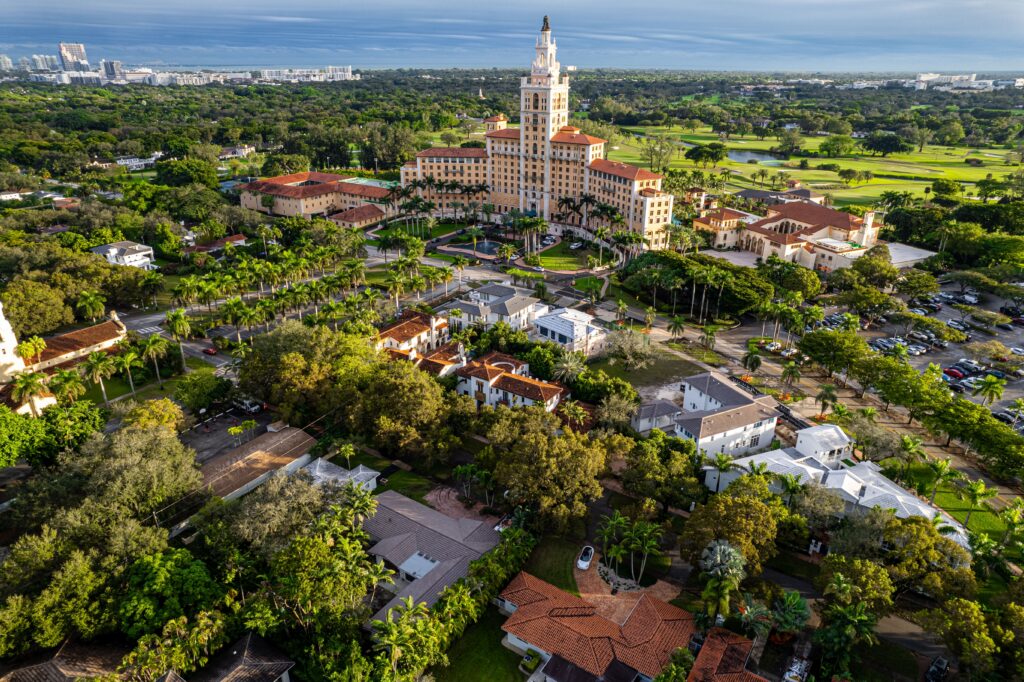
Coconut Grove puts the bay, the shade and the street within walking distance. The City of Miami owns nearly all of the 1.5-mile shore from Peacock Park to Kennedy Park.
How close depends on the part of the Grove. Walk Score rates Northeast Coconut Grove 74, Very Walkable, and Southwest Coconut Grove 60, as of 2026, so “walkable” describes the northeast best. On Saturdays the market at 3300 Grand Avenue is a short walk from Peacock Park.
From the same shore, the boat stays in the neighborhood. Dinner Key Marina has 587 slips and a mooring field, and Regatta Park has a boat ramp.
Near the water, ask for the elevation of the lot. Some houses along South Bayshore stand at 22 feet, while the shore itself floods in king tides; the lot’s elevation guides the choice among Coconut Grove waterfront homes. The City of Miami’s CRS Class 6 brings a 20% discount on eligible flood policies.
Away from the shore, the green is protected by zoning. NCD-3, a Neighborhood Conservation District, aims to keep the Grove’s heavily landscaped residential character and its tree canopy. A house is capped at 25 feet to the eave, next door too, so no neighbor rises above the trees. Coconut Grove homes sit under that rule.
Schools are close as well: Ransom Everglades ranks #1 in Miami-Dade (Niche 2027), and Carrollton sits on Main Highway, so the school run can stay inside the neighborhood. Carver Elementary and Carver Middle earned an A in FLDOE’s 2025-26 grades.
On price and pace, the Grove differs from Brickell more than the shared City of Miami tax rate suggests. In the Grove’s ZIP, which reaches beyond the Grove, condos sold at a higher median than in Brickell’s and with a shorter supply, so a Coconut Grove condo leaves less time to negotiate. Houses moved faster still.
At the top, a house on Munroe Drive sold for $71.9 million, recorded by the Property Appraiser in December 2025.
Coral Gables borders the Grove on the same bay. If a guard at the gate matters more than a public shore, it has two bayfront enclaves with guarded entrances, Gables Estates and Cocoplum.
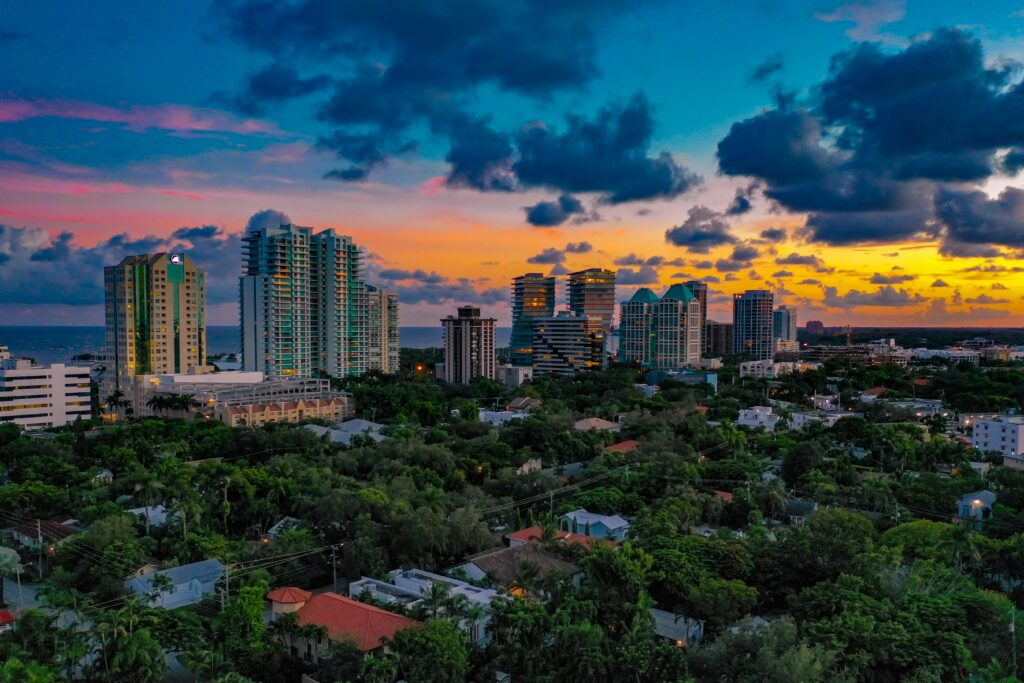
The total millage is the property tax rate per $1,000 of taxable value, so one mill costs $1 a year on every $1,000. It runs from 15.4636 on Key Biscayne to 19.9544 in the City of Miami. On $1 million of taxable value, that gap is about $4,490 a year. The City of Miami rate covers Coconut Grove, Brickell and Edgewater.
| Neighborhood | Water | Homes | 2026 millage |
|---|---|---|---|
| Key Biscayne | Ocean and bay | Houses west, condos east | 15.4636 |
| Fisher Island | Bay and ocean, two marinas | Condos and townhouses; 12 house lots | 16.8983 |
| Miami Beach | Bay islands and ocean | Island houses, ocean condos | 18.6681 |
| Brickell | Biscayne Bay | Condos | 19.9544 |
| Edgewater | Biscayne Bay | Condos | 19.9544 |
| Sunny Isles Beach | Ocean and Intracoastal | Ocean condos, houses with docks | 16.6407 |
| Bal Harbour | Ocean and Intracoastal | Ocean condos, a gated house enclave | 17.2213 |
| Surfside | Ocean | Houses and condos | 18.4824 |
| Aventura | Intracoastal | Condos, single-family subdivisions | 16.7154 |
| Pinecrest | Inland | Houses, one acre in EU-1 | 17.4923 |
| Coral Gables | Bay, behind enclave gates | Houses, condos | 18.1518 |
| Coconut Grove | Biscayne Bay, public shore | Houses, condos | 19.9544 |
Between two homes at the same price, the city line can change the yearly bill by thousands; the parcel’s tax history shows the exact figure.
Supply is the number of months the current listings would take to sell. In the third quarter of 2026, Miami-Dade had 5.1 months of supply in houses. Condos had 12.3.
| Neighborhood | Houses, Q3 2026: median, sales, months of supply | Condos, Q3 2026: median, sales, months of supply |
|---|---|---|
| Key Biscayne | $5,000,000; 13; 10.2 | $1,400,000; 54; 7.4 |
| Fisher Island | 0 sales | 1 sale |
| Miami Beach | $3,300,000; 56; 7.8 | $495,000; 330; 12.7 |
| Brickell, ZIP 33131 (with Downtown) | 1 sale | $622,500; 125; 17.9 |
| South Brickell, ZIP 33129 (reaches beyond Brickell) | $2,190,000; 13; 7.1 | $630,000; 34; 15.3 |
| Edgewater, ZIP 33137 (reaches beyond Edgewater) | $1,795,000; 16; 7.1 | $676,250; 94; 15.9 |
| Sunny Isles Beach | 5 sales | $650,000; 162; 18.9 |
| Bal Harbour | 1 sale | $2,087,500; 29; 12.5 |
| Surfside | 10 sales | $1,190,000; 18; 13.6 |
| Aventura | 6 sales | $445,000; 196; 16.8 |
| Pinecrest | $2,925,000; 62; 6.3 | 7 sales |
| Coral Gables | $2,150,000; 84; 4.5 | $597,500; 54; 7.0 |
| Coconut Grove, ZIP 33133 (reaches beyond the Grove) | $2,825,000; 68; 4.7 | $1,487,500; 75; 6.8 |
Sales of $1 million or more are reported by municipality, so the City of Miami appears as one line for Brickell, Edgewater and its other neighborhoods.
| Municipality or area | Sales of $1M+ in H1 2026 (of them $10M+) |
|---|---|
| Key Biscayne | Houses 21 (1); condos 74 (0) |
| Miami Beach | Houses 133 (42); condos 271 (24) |
| City of Miami (Brickell, Edgewater and other neighborhoods) | Houses 637 (22); condos 309 (6) |
| Sunny Isles Beach | Condos 133 (5) |
| Bal Harbour | Condos 43 (3) |
| Surfside | Condos 18 (9) |
| Aventura | Houses 15 (0); condos 68 (0) |
| Pinecrest | Houses 101 (9) |
| Coral Gables | Houses 202 (18) |
Source: MIAMI REALTORS, Local Residential Market Metrics, Q3 2026 (published October 2026), and South Florida Luxury Sales Report, H1 2026. A count without a median marks a quarter of 10 sales or fewer.
Across the best neighborhoods in Miami, request these eight items for the exact address before an offer.
The price also depends on the street: recorded sales on one street show the range better than an area figure. I track the top of the market street by street, because a countywide record only matters once you know how it translates to one specific property.
| Neighborhood | Type of residence |
|---|---|
| Morningside | Historic houses, 1920s to 1940s |
| Miami Shores | 1920s Mediterranean Revival houses |
| Upper East Side and MiMo | Historic houses; 1950s MiMo motels |
| Wynwood | Warehouses turning into eight-to-twelve-story condos |
| Kendall | Postwar subdivisions and planned communities |
| Miami Lakes | Planned town with lakefront homes |
| Little Havana | Bungalows, duplexes, low-rise apartments |
| Little Haiti | Older houses; towers up to 25 stories planned |
| Overtown | Mid-rise and restored 1950s garden apartments |
| Downtown Miami | Condo towers next to Brickell |
| Bay Harbor Islands | Houses and condos on islands off the Broad Causeway |
Once you know the life you want, the next question is the exact address and its rules. I’m Ory Pelyo, a licensed Broker Associate with more than ten years in Miami real estate.
Send the homes you are weighing, or describe what you are looking for and what matters to you. The relevant properties are selected and reviewed in advance, so showings go only to homes that fit. From the first showing to the keys, one point of contact runs the purchase, with licensed partners on the legal, tax and insurance side. The answer comes the same day. Write by email or WhatsApp, or call +1 305-874-9500.

Related articles
 Most Expensive Homes Sold in Miami-Dade: The Top 10
 Where Your Miami Pre-Construction Condo Deposit Sits, and What to Ask First
 Miami $10 Million Home Sales Are on Pace for an All-Time Record in 2026
 Why does Mamdani’s NYC Win Matters – Relates to Miami Real-Estate?
 What High-Net-Worth Buyers Look For in Miami: Waterfront vs. High-Rise Living?
 Why Should You Buy Property Under an LLC Instead of Your Personal Name?
 Is it the Right Time to Invest in Miami Luxury Condos?
 A Complete Guide to Buying Condos For Sale in Miami
 Miami Real Estate Market Trends: Latest Updates 2025
 Art Basel – What It Means for Miami Real Estate
 Choosing a Home with Top-Rated Public Schools: Understanding the School System and What to Consider When Buying a Home
 Stunning 2 bedroom condo | Off market for rent
Recomend this to a friend, just enter their email below.